
Out At The Lingcod Grounds
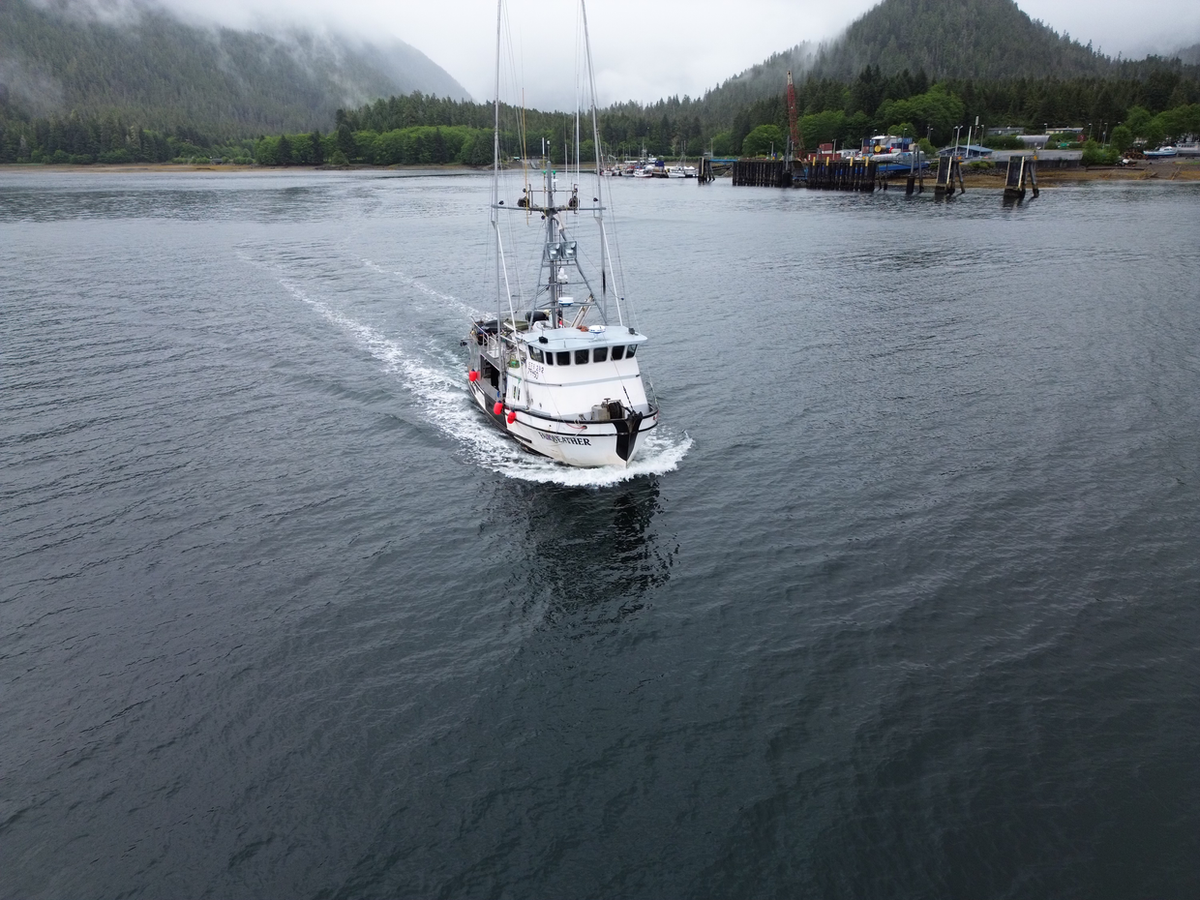
Greetings from the docks of Sitka! We’re unloading our lingcod today, after a calm thirty-one hour drive down the Lost Coast of Alaska, from the west end of Yakutat Bay to heart of Sitka Sound.
We had a good few weeks of harvesting lingcod. All in all, for our two and a half week journey, only about ten days were spent dragging hooks. We had a few weather days at the beginning of our trip, tied to the dock in Yakutat riding out gusting winds and driving rain. Followed by spectacular two weeks of weather — our only breaks were to take a day off the water to glaze (dip the frozen fish in sea water — ensuring they don’t get freezer burnt), or take a day to just enjoy having our boots on the ground.

Our lingcod are harvested in a small boat fishery called “dinglebar”. It’ s a quirky, non traditional fishery — likely pioneered by a creative fisherman looking for a new way to harvest lingcod, and then coined and regulated by Fish and Game because it turned out to be almost efficient.
Though quirky, the name is actually quite descriptive: in the dinglebar fishery, we are more or less “dingle-ing” a bar (steel section of shaft) around lingcod nests. We drag only one line in this fishery, unlike the four that we drag for salmon. At the bottom of the line is a heavy section of steel shaft. Off the top end of the shaft, we have what’s called a “train”.
The train is lined with corks, for buoyancy - and one hard buoy-ball at the end for an extra lift. And along the train are lead headed hooks, outfitted with a large rubber worm-like critter called a “grub”. Here’s an illustration of what the gear configuration looks like!

Essentially, we drive around looking for pinnacles — underwater hills (or sometimes underwater mountains!). Generally lingcod are nesting in these pinnacles. Our bar will alert us when we’re at the bottom, so we can pull the wire in. We want to be near, but not on, the bottom. Caleb has his hand on the wire all day, feeling for when the bar taps bottom, and feeling for when a “tug” indicates a bite. Once we’ve passed over the pinnacle, we reel in the wire, haul the fish off the train, and turn around to do it all over again!
It’s a small, moderately inefficient fishery, but we sure enjoy having the change to target lingcod directly — and we know YOU enjoy eating them!
By this afternoon, the lingcod will be safely loaded into their shipping container, headed for Washington on the next barge. Then we’ll put our “salmon brains” on — our 2025 King Salmon Opener is only 8 days away!
We can’t wait to share our lingcod with you.


0 comments